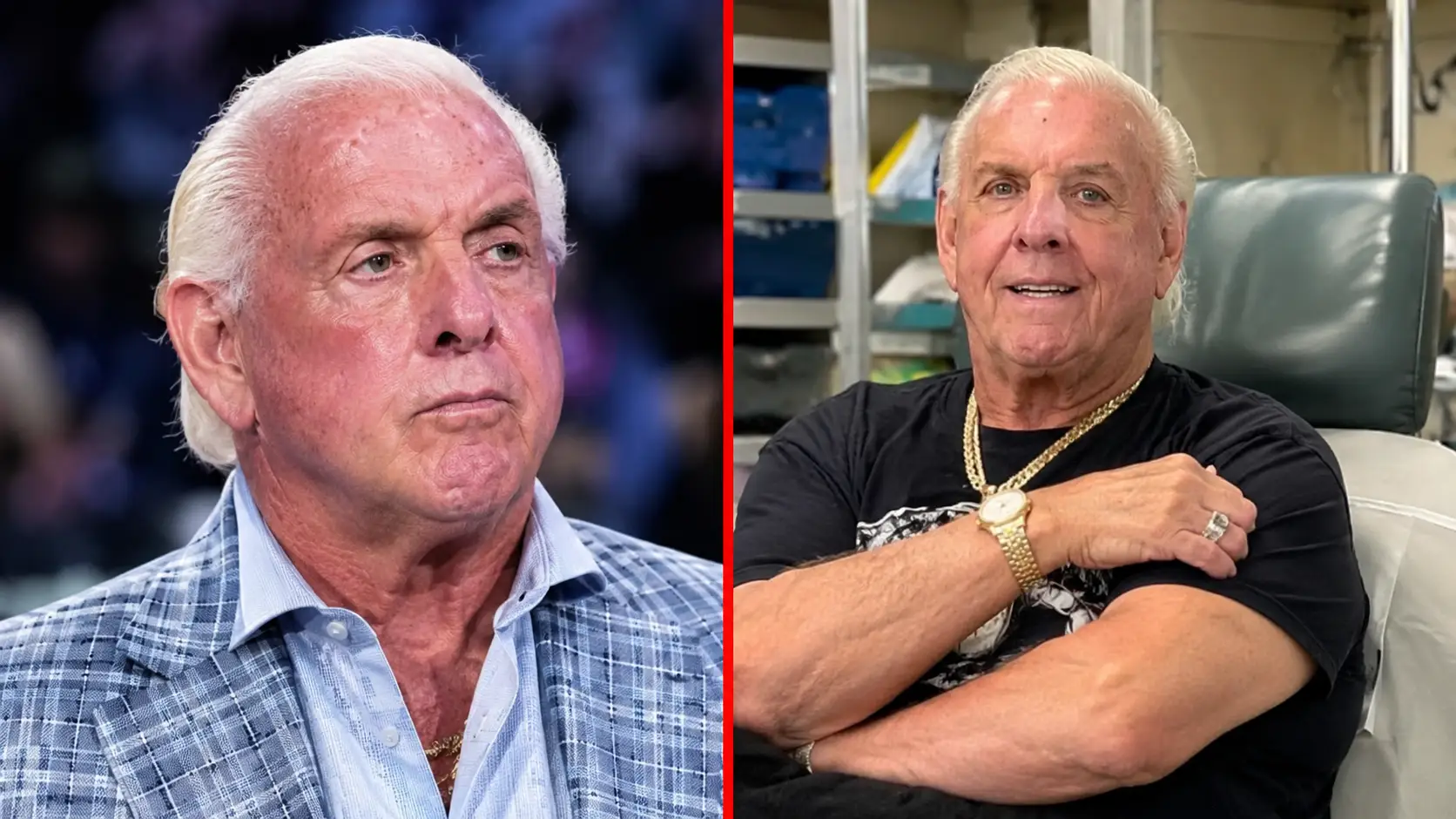
Ric Flair Health Update: Current Medical Status, Recovery, and Complete Health Timeline
Ric Flair (Richard Morgan Fliehr), now 77, is in stable condition and retired from active in-ring competition while managing a chronic cardiovascular condition with an implanted cardiac pacemaker. Following his medically induced coma in August 2017, a subsequent cardiac procedure in May 2019, and two severe dehydration-induced syncope episodes during his July 2022 farewell match, the 16-time world champion maintains an active public schedule from his home base in Tampa, Florida, under routine cardiology oversight.
Unlike viral social media rumors that periodically recycle photographs from his 2017 intensive care stay, Flair has not suffered a new life-threatening hospitalization. His ongoing physical limitations stem from cumulative musculoskeletal trauma, dating back to a 1975 plane crash that fractured three vertebrae, combined with decades of cardiovascular strain and bowel resection recovery.
Quick Facts: Ric Flair Verified Health & Status Snapshot
| Category | Verified Details |
| Full Legal Name | Richard Morgan Fliehr |
| Date of Birth / Age | February 25, 1949 (Age 77) |
| Current Residence | Tampa, Florida, USA |
| Current Medical Status | Stable; managing chronic heart rhythm regulation via implanted pacemaker |
| In-Ring Status | Permanently retired from physical matches (Final bout: July 31, 2022) |
| Primary Historical Emergencies | 1975 spinal fracture (plane crash); August 2017 bowel obstruction, sepsis, and renal failure; May 2019 cardiac procedure |
| Primary Public Ventures | Promotional appearances, convention signings, and beverage brand endorsements |
Current Health Status and Daily Pacemaker Management
Flair’s day-to-day health regimen revolves around cardiovascular monitoring and pacing management. After decades of performing 300-plus days a year across the National Wrestling Alliance (NWA), World Championship Wrestling (WCW), and WWE, Flair was diagnosed with alcoholic cardiomyopathy, a condition in which prolonged heavy alcohol consumption weakens and thins the heart muscle, reducing its ability to pump blood efficiently.
To regulate his cardiac output and prevent dangerous arrhythmias, Flair relies on an implanted pacemaker. During public appearances and media interviews, Flair has openly discussed the realities of living with the device:
-
Routine Cardiology Checkups: His pacemaker requires periodic telemetry checks to monitor battery longevity, lead impedance, and atrial/ventricular pacing thresholds.
-
Orthopedic Mobility: Over four decades of absorbing high-impact falls in the ring after breaking his back in 1975 left Flair with chronic joint stiffness and spinal compression, though he remains fully ambulatory without mobility aids.
-
Addressing Viral Death Hoaxes: Search spikes around Flair’s health frequently trace back to clickbait videos circulating his August 2017 hospital photos. Flair and his family routinely debunk these false reports via his verified social media channels.
Inside the 2022 Farewell Match Scare: Dehydration vs. Cardiac Arrest
Flair’s most recent acute medical scare occurred in front of nearly 7,000 fans at the Nashville Municipal Auditorium on July 31, 2022, during the Ric Flair’s Last Match pay-per-view event. At age 73, competing with a pacemaker alongside his then-son-in-law Andrade El Idolo against Jeff Jarrett and Jay Lethal, Flair appeared visibly disoriented midway through the 26-minute bout.
Speaking on his To Be The Man podcast immediately after the event, Flair revealed that he passed out twice inside the ring. While viewers feared a pacemaker malfunction or myocardial infarction, ringside physicians determined the root cause was severe acute dehydration.
-
Pre-Match Fluid Depletion: In an effort to drop weight and achieve lower subcutaneous water retention for his final televised appearance, Flair strictly curtailed his hydration over the preceding 48 hours while training heavily.
-
Syncope Onset: Once the match began and his heart rate elevated under arena lighting, reduced blood volume caused a sharp drop in blood pressure, starving the brain of oxygen and triggering brief blackouts during pins and mat transitions.
-
Post-Match Resuscitation: Backstage medical personnel administered multiple intravenous (IV) fluid bags and electrolytes immediately after the bell. Within two hours, Flair’s blood pressure stabilized without requiring emergency hospital transport.
The August 2017 ICU Crisis: A 20% Survival Prognosis
The defining medical crisis of Flair’s later life occurred on August 12, 2017, when he was rushed to the emergency department at Gwinnett Medical Center in Lawrenceville, Georgia, with acute abdominal pain. What began as a gastrointestinal blockage rapidly cascaded into multi-system organ failure.
According to interviews published by People and ESPN, doctors placed Flair into a medically induced coma on August 14, 2017, to perform emergency bowel resection surgery. During the perioperative period, Flair developed three compounding complications:
-
Obstructive Bowel Resection: Surgeons removed a compromised section of his intestine, requiring Flair to wear an ostomy bag temporarily during his initial months of rehabilitation before undergoing a successful reversal surgery.
-
Acute Renal Failure: Systemic shock shut down his kidneys, necessitating continuous renal replacement therapy (dialysis) in the intensive care unit.
-
Congestive Heart Failure & Sepsis Risk: His weakened myocardium struggled to maintain perfusion under anesthesia, leading attending physicians to inform his family that he carried only a 20% chance of survival.
Flair remained hospitalized and in an inpatient physical rehabilitation facility in metro Atlanta for five weeks. Having lost 43 pounds (dropping from 249 pounds to 206 pounds) and temporarily losing the ability to walk or twist bottle caps due to severe muscle atrophy, he underwent intensive occupational and physical therapy before receiving clearance to return home in late September 2017.
Complete Medical and Injury Timeline (1975–Present)
Flair’s resilience in his seventies is clinically notable given the severity of his historical trauma. Below is the verified chronological record of his major medical events:
| Date | Medical Event / Diagnosis | Clinical Details & Outcome |
| October 4, 1975 | Wilmington, NC Plane Crash | A twin-engine Cessna 310 crashed after running out of fuel. Flair suffered compression fractures in three vertebrae (T12/L1) at age 26. Told he would never wrestle again, he returned within six months by permanently altering his falling mechanics to land on his hip and shoulder rather than flat on his back. |
| 2005–2008 | Inner Ear & Cardiovascular Evaluations | Diagnosed with benign positional vertigo and early-stage alcoholic cardiomyopathy during his second WWE tenure, prompting initial cardiac monitoring. |
| August 14, 2017 | Medically Induced Coma & Bowel Surgery | Emergency hospitalization at Gwinnett Medical Center (GA) for a ruptured/obstructed bowel, complicated by kidney failure requiring dialysis and congestive heart failure. Discharged to rehab in September 2017. |
| July 2018 | Bowel Reversal Surgery | Underwent a scheduled follow-up surgery in Atlanta to reverse the colostomy/ileostomy procedure from his 2017 emergency operation. |
| May 20, 2019 | Scheduled Cardiac Procedure | Hospitalized in Atlanta on May 16 after experiencing shortness of breath and elevated heart rates. Following a four-day stabilization window, doctors performed a successful cardiac procedure to adjust his pacemaker regulation. Discharged May 22, 2019. |
| July 31, 2022 | In-Ring Syncope (Dehydration) | Suffered two brief blackouts during his farewell tag-team match in Nashville, TN, caused by severe dehydration. Treated backstage with IV fluids. |
| 2023–2026 | Ongoing Outpatient Management | Remains retired from physical bumps; makes non-contact appearances and promotional tours while managing cardiovascular health in Florida. |
How the 1975 Plane Crash Reshaped His Long-Term Physiology
Understanding Flair’s physical posture and gait in 2026 requires examining the October 4, 1975 aviation accident in Wilmington, North Carolina. Travelling alongside wrestlers Johnny Valentine, Bob Bruggers, Tim Woods, and promoter David Crockett, Flair was aboard an overloaded Cessna 310 that stalled and crashed short of the runway. The pilot died of his injuries, and Valentine was permanently paralyzed from the waist down.
Flair’s back broke in three places. Because he refused spinal fusion surgery out of fear it would permanently end his athletic career, his vertebrae healed with structural compression. For the next 47 years, Flair avoided taking standard flat-back wrestling bumps, almost always rotating in mid-air to absorb impact across his right latissimus dorsi and hip. That compensatory biomechanics adaptation preserved his spinal cord from paralysis, though it accelerated asymmetric wear on his hips, lower lumbar spine, and shoulders over subsequent decades.
Frequently Asked Questions
Is Ric Flair currently in the hospital?
No. Ric Flair is not hospitalized and remains at home in Tampa, Florida, maintaining a regular schedule of convention appearances, podcast interviews, and brand promotions. Recurrent social media posts claiming he is in critical condition reuse archival photographs from his August 2017 coma or May 2019 heart procedure.
Does Ric Flair have a pacemaker?
Yes. Ric Flair has an implanted cardiac pacemaker to manage irregular heart rhythms and cardiomyopathy. He underwent a follow-up cardiovascular procedure in May 2019 to update and stabilize his cardiac regulation and competed with the pacemaker in place during his final wrestling match in July 2022.
Why did Ric Flair pass out during his last match in 2022?
Flair passed out twice during his July 31, 2022 farewell match in Nashville due to severe acute dehydration, not a heart attack. He had cut fluids aggressively prior to the event to look leaner in the ring, causing his blood pressure to drop sharply under physical exertion until ringside doctors rehydrated him with intravenous fluids.
What caused Ric Flair’s coma in 2017?
In August 2017, Flair was placed in a medically induced coma prior to emergency surgery to remove a severe bowel obstruction. The crisis was compounded by septic shock, congestive heart failure, and acute kidney failure requiring dialysis, leaving him with a 20% survival prognosis before his recovery.
Can Ric Flair ever wrestle another match?
While Flair occasionally jokes in interviews about taking one more bump, he has confirmed he is permanently retired from active in-ring competition. At 77 years old, his implanted pacemaker and blood-thinning regimen make taking physical impacts inside a wrestling ring medically unsafe.
Sources & References
- ESPN: Ric Flair medical history, 30 for 30 Nature Boy documentation, and post-2017 hospitalization coverage, Verified details of the August 2017 Gwinnett Medical Center ICU admission, renal dialysis, and 1975 Wilmington plane crash spinal injuries.
- People Magazine: Ric Flair Opens Up About Surviving His 2017 Coma and 20% Survival Odds, Verified weight loss metrics (43 lbs), bowel resection recovery, and physical rehabilitation timeline.
- Sports Illustrated: Pro Wrestling Coverage: Ric Flair’s Last Match Medical Report & Post-Show Statements, Verified details of the July 31, 2022 Nashville farewell bout and dehydration-induced syncope diagnosis.
- WWE Official Archive: Ric Flair Hall of Fame Biography & Career Milestone Record, Verified biographical dates, championship history, and retirement timelines.
What do you feel about this post?

Like

Love

Happy

Haha

Sad

Angry

I am an independent writer and digital researcher tracking everyday trends, tech shifts, and modern culture across the US. I focus on cutting through internet noise to bring you crisp, honest stories and practical takeaways you can actually use.