Jay Rockefeller Dies at 89: How an Oil Dynasty Heir Made West Virginia His Life and Cause
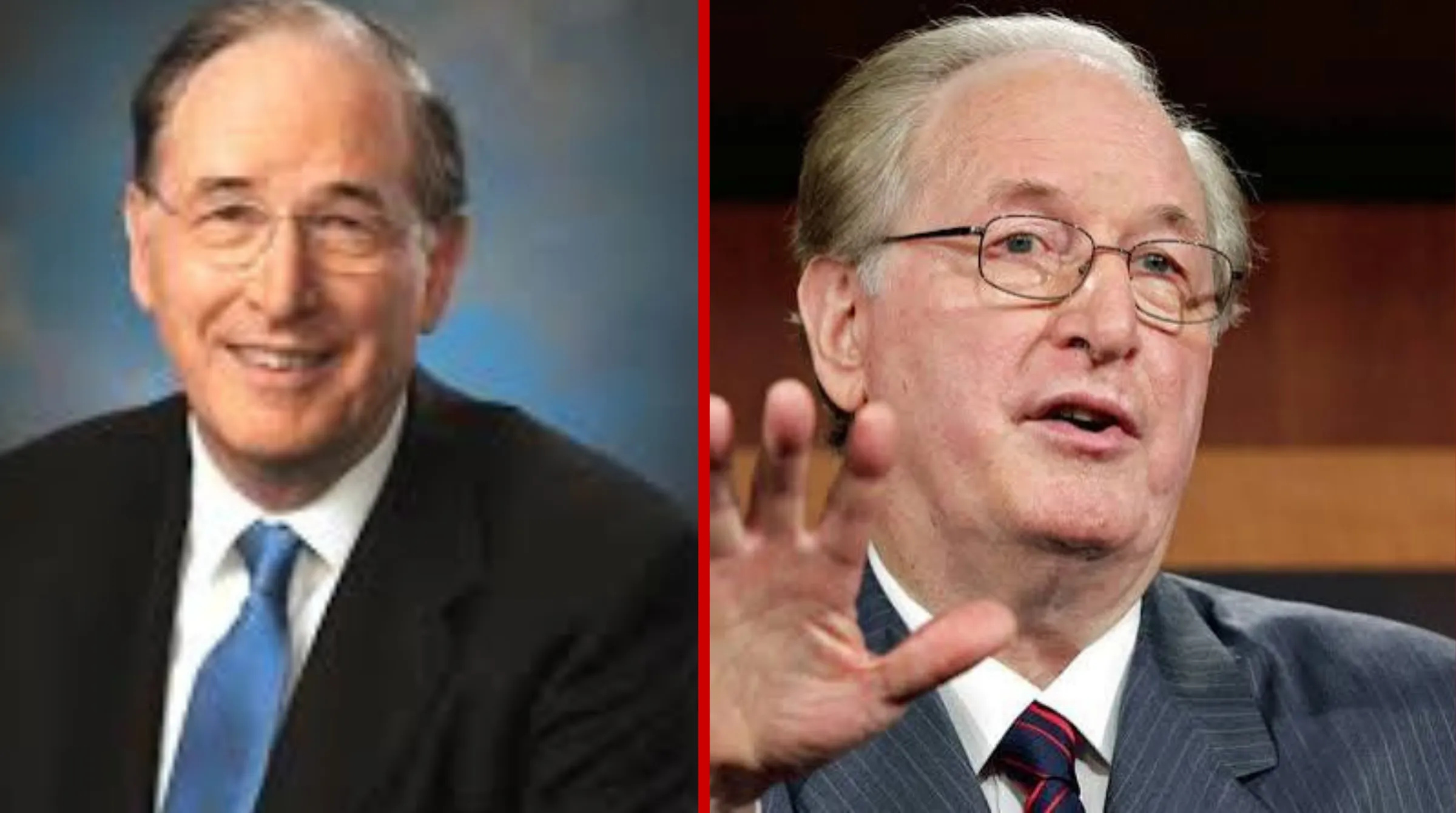
John Davison “Jay” Rockefeller IV, the great grandson of Standard Oil founder John D. Rockefeller who traded Manhattan privilege for a dusty coal hollow in West Virginia and spent the next five decades serving the state as governor and United States senator, died on Friday, November 6, 2026. He was 89 years old.
Sources close to the family told WV MetroNews that Rockefeller passed away surrounded by loved ones at his home in Washington, D.C.. His death was also confirmed by The Washington Post and announced in a Friday tribute by West Virginia Governor Patrick Morrisey. His family did not immediately release a specific cause of death.
For generations of West Virginians, Rockefeller was a fascinating political paradox. He stood six feet six inches tall, carried the most famous billionaire last name in American capitalism, and grew up in a family synonymous with eastern Republican politics. Yet he became a staunch liberal Democrat who won two terms in the statehouse from 1977 to 1985 and five consecutive terms in the U.S. Senate from 1985 to 2015. Along the way, he helped create the Children’s Health Insurance Program (CHIP), fought for coal miners’ health benefits, and used relationships he built as a student in Japan to turn a rural stretch of Putnam County into one of North America’s busiest automotive manufacturing hubs.
From Tokyo Dorm Rooms to a Dirt Road in Emmons
To understand how a kid born in New York City on June 18, 1937, ended up representing Appalachian coal country, you have to look at how badly young Jay Rockefeller wanted to step out from under his family’s shadow. His parents, John D. Rockefeller III and Blanchette Ferry Hooker, raised him in an atmosphere of quiet philanthropy and serious expectations. After graduating from Phillips Exeter Academy, he enrolled at Harvard University to study Far Eastern languages and history.
Instead of coasting through Cambridge, he took a leap that shaped the rest of his life. In 1957, he left for Tokyo to spend three years studying Japanese at International Christian University. He lived in modest student quarters, learned to speak and read Japanese fluently, and formed close friendships with classmates and business families, including the Toyoda family behind Toyota Motor Corporation. After finishing his Harvard degree in 1961 and studying Chinese at Yale University, he worked in Washington as an assistant to Peace Corps Director Sargent Shriver and spent a brief stint in the State Department’s Bureau of East Asian and Pacific Affairs.
Then came the autumn of 1964. Working for President Lyndon B. Johnson’s domestic anti poverty initiative, Volunteers in Service to America (VISTA), the 27 year old Rockefeller was assigned to Emmons, an unincorporated coal mining community of a few hundred people straddling Boone and Kanawha counties along the Big Coal River in West Virginia.
Emmons didn’t even have a paved road connecting it properly to the county seat, and the local schoolhouse was falling apart. Folks in the hollow were understandably skeptical when a lanky multimillionaire showed up on their porches asking how he could help. What won them over wasn’t his checkbook. In fact, he refused to simply write personal checks to fix local problems because he knew that would turn residents into dependents rather than partners. Instead, he lived in a small rented house, ate supper at miners’ kitchen tables, and organized neighbors to pressure county commissioners for a bridge, road repairs, and clean water.
Those two years in Emmons changed his politics forever. Seeing what happened to working families when mines closed or when a child got sick without a doctor nearby convinced him that government had to play an active role in protecting vulnerable citizens. In 1966, he switched his party registration from Republican to Democrat, becoming the sole member of the Rockefeller dynasty to hold public office as a Democrat. That same year, voters in Kanawha County elected him to the West Virginia House of Delegates.
The Arch Moore Rivalry and Hard Times in Charleston
In 1967, Rockefeller married Sharon Percy, the daughter of Republican U.S. Senator Charles Percy of Illinois. Rather than pulling him back toward Washington society, Sharon moved to Charleston and threw herself into public broadcasting and community work while Jay ran for West Virginia Secretary of State in 1968 and won.
His first real political bruising arrived in 1972. Running for governor as an idealistic reformer, Rockefeller came out publicly against strip mining, arguing that tearing the tops off mountains ruined the land and killed underground mining jobs. Republican incumbent Governor Arch A. Moore Jr., a charismatic populist and master campaigner, seized on that stance to paint Rockefeller as a wealthy New York outsider who wanted to put West Virginia coal miners out of work. Moore beat him soundly that November.
Plenty of wealthy candidates would have packed their bags after a loss like that. Rockefeller stayed. From 1973 to 1975, he served as president of West Virginia Wesleyan College in Buckhannon, traveling the back roads of Upshur County and listening to business owners and union miners alike. He also realized that in West Virginia, you couldn’t help coal miners if they believed you were trying to shut down their industry.
He moderated his position on surface mining, focused on mine safety and black lung benefits, and ran for governor again in 1976. This time, he won in a landslide. Four years later, in the 1980 gubernatorial election, he faced his old nemesis Arch Moore in a heavyweight rematch and beat him to become the first Democratic nominee ever reelected to a consecutive term as Governor of West Virginia.
His second term as governor tested him in ways no campaign ever could. The national recession of the early 1980s hit West Virginia’s coal, steel, glass, and chemical industries like a wrecking ball. Between 1982 and 1984, the state’s unemployment rate hovered between 15 and 20 percent, the highest in the nation. Rockefeller had to make painful budget cuts while fighting to keep roads open and help workers save Weirton Steel through what became the largest employee stock ownership buyout in the country.
In a twist of West Virginia political history, the Rockefeller and Moore families remained intertwined for nearly five decades. When Rockefeller left the governor’s office to enter the U.S. Senate in January 1985, Arch Moore succeeded him as governor. And when Rockefeller retired from the Senate 30 years later in January 2015, the person elected to take his Senate seat was Moore’s daughter, Republican Shelley Moore Capito.
How Three Years in Tokyo Built Putnam County’s Job Engine
Ask everyday West Virginians today what Jay Rockefeller actually left behind on the ground, and two things come up right away: kids’ healthcare and the Toyota plant in Buffalo.
In the mid 1990s, when Toyota was scouting locations for a new North American engine manufacturing plant, West Virginia wasn’t at the top of most corporate site selection lists. What the state did have was a senator who could sit down with Toyota’s senior leadership in Tokyo, skip the interpreter, and talk with them in fluent Japanese about loyalty, long term workforces, and shared history.
As documented by West Virginia Public Broadcasting, Rockefeller’s personal relationship with the Toyoda family dating back to the 1960s persuaded company executives to take a serious look at a cornfield along the Kanawha River in Putnam County. Just six weeks before Rockefeller’s death, on September 24, 2026, Governor Patrick Morrisey and plant president David Rosier gathered with workers in Buffalo to mark a major milestone reported by the Toyota USA Newsroom: 30 years of Toyota West Virginia.
What started with Rockefeller’s personal pitch has grown into a 3.3 billion dollar facility employing more than 2,000 West Virginians, serving as the sole Toyota plant in North America producing hybrid transaxles.
That fierce protection of local manufacturing jobs also led Rockefeller to break publicly with his own family on international trade. In 1993, while his uncle David Rockefeller was one of the nation’s loudest corporate champions of the North American Free Trade Agreement (NAFTA), Senator Jay Rockefeller voted against the pact, warning that it would hollow out factory towns across the Ohio and Kanawha valleys.
Thirty Years in the Senate: Healthcare and the Iraq Intelligence Fight
When Rockefeller arrived in the Senate in January 1985, West Virginia’s senior senator was Robert C. Byrd, the legendary master of Senate appropriations. Rather than competing with Byrd for highway and bridge earmarks, Rockefeller carved out his own territory on the Senate Finance Committee, the Veterans’ Affairs Committee, the Intelligence Committee, and later as Chairman of the powerful Senate Committee on Commerce, Science, and Transportation from 2009 to 2015.
His proudest legislative achievement came in 1997, when he teamed up with Senator Ted Kennedy and Senator Orrin Hatch to author the Children’s Health Insurance Program, widely known as CHIP. Before CHIP passed, millions of working parents were trapped in a cruel gap: they worked full time jobs that didn’t offer affordable family insurance, yet their paychecks were slightly too high to qualify for Medicaid.
CHIP closed that gap, insuring millions of low income children nationwide. Thirteen years later, Rockefeller fought hard during the drafting of the 2010 Affordable Care Act to protect Medicaid expansion, hold insurance companies accountable on medical spending, and preserve benefits for miners suffering from black lung. Healthcare was personal for him in another way, too. After watching his mother Blanchette battle Alzheimer’s disease, he founded the Blanchette Rockefeller Neurosciences Institute at West Virginia University in 1999 to advance brain research.
His tenure as leader of the Senate Select Committee on Intelligence from 2007 to 2009 revealed his willingness to admit a mistake and hold the executive branch accountable. Like many Democrats, Rockefeller voted in October 2002 to authorize the use of military force in Iraq after reviewing classified intelligence briefings claiming Saddam Hussein was pursuing nuclear and biological weapons. When the infamous Niger uranium documents turned out to be crude forgeries, Rockefeller was furious that the Senate had been misled.
He launched a multi year bipartisan probe into how the George W. Bush administration handled prewar intelligence. On June 5, 2008, releasing the final pieces of the Intelligence Committee’s Phase II report, Rockefeller stated plainly: “The president and his advisers undertook a relentless public campaign in the aftermath of the attacks to use the war against Al Qaeda as a justification for overthrowing Saddam Hussein.” For his oversight work, the U.S. Intelligence Community later awarded him the National Intelligence Distinguished Public Service Medal.
Key Milestones in Jay Rockefeller’s Public Life
| Year | Milestone | Impact on West Virginia and National Policy |
| 1964 | Arrives in Emmons, W.Va. as a VISTA volunteer | Trades New York privilege for anti poverty community organizing in Boone and Kanawha counties |
| 1966 to 1972 | Elected to House of Delegates and Secretary of State | Switches from Republican to Democrat and builds a statewide political base before losing the 1972 governor’s race to Arch Moore |
| 1977 to 1985 | Serves two terms as 29th Governor of West Virginia | Defeats Arch Moore in 1980 rematch, steers state through early 1980s recession, and backs the Weirton Steel employee buyout |
| 1985 to 2015 | Serves five terms in the U.S. Senate | Co authors CHIP in 1997, recruits Toyota to Putnam County, and chairs the Intelligence, Veterans’ Affairs, and Commerce committees |
| Nov 6, 2026 | Dies at home in Washington, D.C. at age 89 | Remembered across party lines as the last statewide New Deal style Democrat of his era in West Virginia |
The End of a Political Era
By the time Rockefeller announced on January 11, 2013, that he wouldn’t seek a sixth Senate term in 2014, West Virginia’s political ground had shifted completely beneath his feet. A state that once voted reliably for Democratic presidents had become one of the most heavily Republican states in America, driven by clashes over federal environmental regulations and coal policy. Yet voters kept reelecting Rockefeller until the day he stepped down voluntarily, largely because people trusted that he genuinely cared about the state he had chosen fifty years earlier.
When he announced his retirement in Charleston, his voice cracked slightly as he summed up what moving to a small coal hollow in 1964 meant to him, saying that West Virginia had become “my life and my cause.” He is survived by his wife of nearly six decades, Sharon Percy Rockefeller, and their four children, John Davison V, Valerie, Charles, and Justin.
What do you feel about this post?

Like

Love

Happy

Haha

Sad

Angry

I am an independent writer and digital researcher tracking everyday trends, tech shifts, and modern culture across the US. I focus on cutting through internet noise to bring you crisp, honest stories and practical takeaways you can actually use.