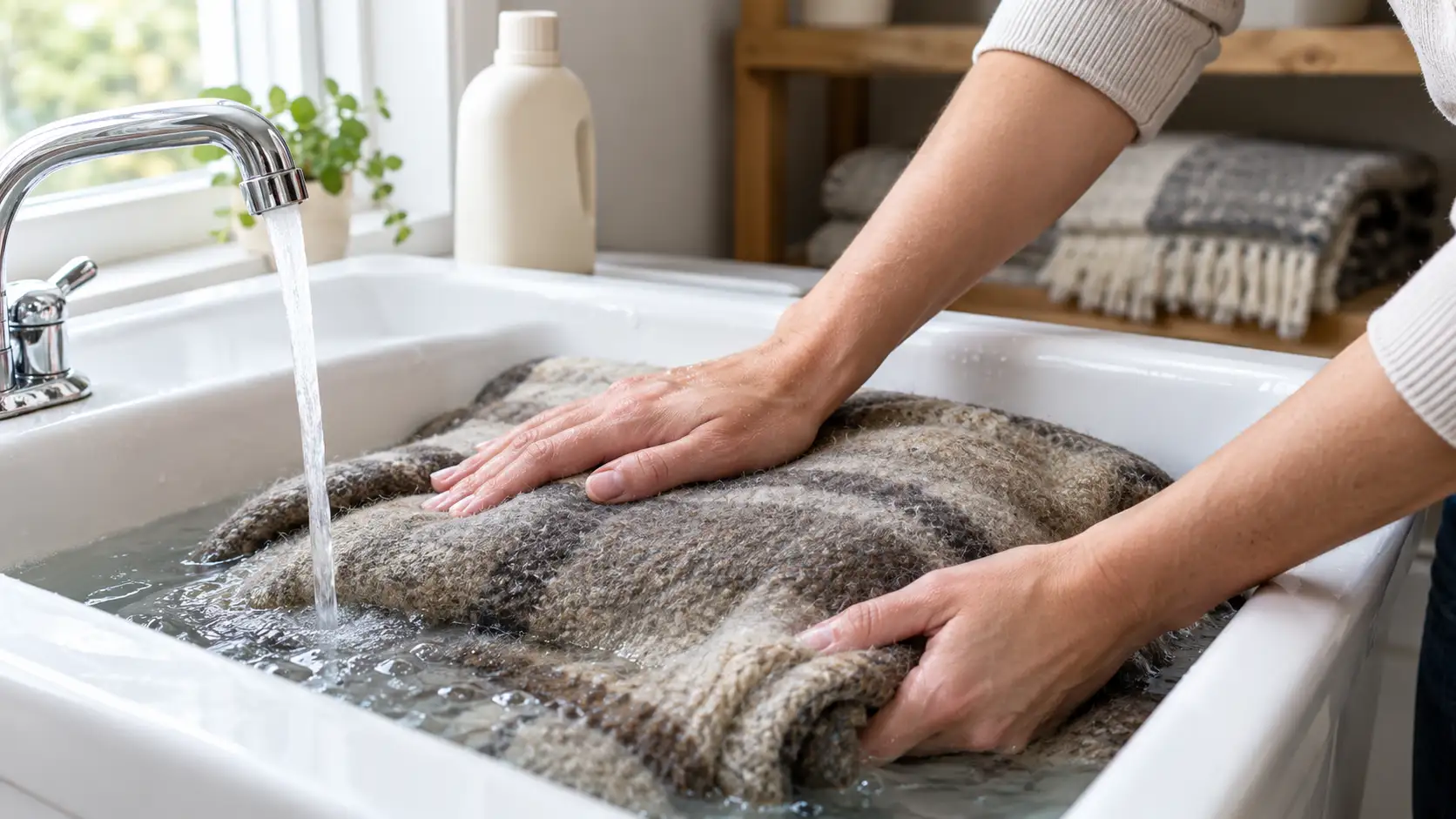
The safest way to wash a wool blanket is to follow its care label first. For a machine-washable blanket, use the wool or delicate cycle, cold water, and a mild wool detergent. Avoid bleach, harsh agitation, and high heat, then dry the blanket flat or in a way that supports its weight.
Quick Facts
| Question | Best practice |
|---|---|
| Should every wool blanket be washed? | No. Airing and gentle brushing can often refresh wool between washes. |
| Can a wool blanket go in the washer? | Yes, but only when the care label says it is machine washable. |
| What water temperature should you use? | Cold water is the safest general choice for machine-washable wool blankets. |
| What detergent is best? | A mild, neutral wool detergent without bleach or heavy enzymes. |
| Can you put wool blankets in the dryer? | Generally avoid it unless the manufacturer’s instructions specifically allow tumble drying. |
| How should a wool blanket dry? | Support the wet blanket fully and keep it away from direct sunlight and heat. |
Before You Wash a Wool Blanket
Start with the blanket’s care label. This matters more than any general wool-washing rule because blankets can differ in construction, fiber treatment, lining, size, and finishing.
A label that says machine washable gives you permission to use a washing machine according to the specified instructions. A hand wash instruction calls for gentler treatment, while dry clean only means you should not substitute a home-washing method simply because the blanket is labeled 100% wool. Woolmark likewise advises checking the product’s care claim before choosing a cleaning method.
Also check the blanket’s size and condition. A large, heavy blanket can become extremely heavy when saturated. Even when the label permits washing, your washer should be large enough to handle the load without compressing the blanket into a tight mass.
Does a Wool Blanket Need to Be Washed Often?
Usually, no.
Wool has natural resistance to odors and stains, so frequent full washing is often unnecessary. Woolmark specifically recommends washing wool blankets sparingly and notes that some guidelines suggest washing them about once every three months. That is a general reference point, not a rule that every household must follow.
For ordinary dust and stale odors, take the blanket outside, shake it gently, and let it air in a well-ventilated area. A soft-bristle brush can also remove surface soil without putting the entire blanket through a wash cycle.
Spot cleaning is another useful option. For a fresh liquid stain, Woolmark recommends using warm water with a mild detergent and blotting rather than aggressively scrubbing the fabric.
How to Wash a Wool Blanket in a Washing Machine
When the care label specifically allows machine washing, keep the process gentle.
1. Prepare the blanket
Shake the blanket outside to remove loose dust and debris. Check for stains and treat them before starting the main wash.
Close any fasteners and remove objects that could catch on the fabric. If the blanket is particularly delicate, turning it inside out where practical can help reduce surface wear.
2. Choose the wool or delicate cycle
Use the machine’s wool cycle when one is available. If there is no wool setting, a cold-water delicate cycle is a more suitable alternative than a normal or heavy-duty wash.
Woolmark recommends a wool setting with gentle action for machine-washable wool products and advises using a cold or delicate cycle when a wool program is unavailable.
3. Use a mild wool detergent
Choose a mild, neutral detergent designed for wool or other delicate fibers. Avoid heavy-duty detergents, bleach, and enzyme-based “bio” detergents. Woolmark also advises against both chlorine and oxygen-based bleach on wool.
You do not need a large amount of detergent. Follow the detergent manufacturer’s dosing instructions, especially for a high-efficiency washer.
4. Skip aggressive washing
Do not use a heavy soil cycle, vigorous agitation, or unnecessarily long wash program unless the product instructions specifically call for it.
The reason is rooted in the structure of untreated wool. Wool fibers have microscopic scales that can interlock when moisture and mechanical agitation work together. That process can lead to felting and shrinkage.
This is why a hot, vigorous wash is a poor substitute for a proper wool cycle.
5. Remove the blanket promptly
Once the wash is finished, take the blanket out instead of leaving it sitting wet in the washer.
Wet wool is heavy, and leaving it bunched up can encourage creasing and uneven drying. Handle it carefully rather than grabbing one corner and allowing the full weight of the blanket to hang from it.
How to Hand Wash a Wool Blanket
If the label says hand wash, use a large tub or clean bathtub so the blanket has enough room to move without being aggressively worked.
Fill the tub with clean, lukewarm water and add a small amount of mild wool detergent. Woolmark’s general hand-washing guidance uses water around 30°C and recommends soaking the wool before rinsing thoroughly.
Submerge the blanket gently and let the water work through the fibers. Avoid rubbing, twisting, pulling, or wringing the fabric.
Drain the wash water, then rinse thoroughly. Press excess water out carefully rather than twisting the blanket.
For a large blanket, a practical technique is to lift it with both arms or use a second person for support. The goal is to prevent the saturated wool from stretching under its own weight.
How to Dry a Wool Blanket
Drying is just as important as washing.
Woolmark’s blanket-specific guidance recommends supporting the wet blanket by hanging it flat over a clothesline rather than allowing its full weight to hang from a narrow point. Keep it away from direct sunlight because intense sunlight can fade the material and may cause it to dry too quickly.
For delicate wool, laying the blanket flat on a clean, suitable surface can provide even better support.
Do not place a wet wool blanket directly over a radiator or another strong heat source. Woolmark advises drying wool away from direct heat and sunlight.
Can You Tumble Dry a Wool Blanket?
Do not assume that a wool blanket can safely go in the dryer.
Woolmark notes that certain specially treated wool products can be tumble dried on low heat when their care claim specifically permits it. Products marked do not tumble dry should not be placed in a dryer because shrinkage can occur.
For a typical wool blanket, air drying with full support is the safer approach unless the manufacturer’s instructions clearly state otherwise.
What Not to Do When Washing Wool
Several common laundry habits can cause problems with wool.
Don’t use hot water. Cold water is the safer general choice for machine-washable wool blankets, particularly when the manufacturer’s instructions do not specify a higher temperature.
Don’t scrub or wring the blanket. Excessive agitation can contribute to felting and distortion.
Don’t use bleach. Woolmark advises avoiding both chlorine and oxygen bleach when washing wool.
Don’t dry it with strong heat. Radiators, direct heat, and unauthorized tumble drying can affect wool’s shape, feel, or dimensions.
Don’t ignore the label. A 100% wool label tells you what the fiber is; it does not automatically tell you which cleaning method the finished blanket can withstand.
How to Remove a Small Stain Without Washing the Whole Blanket
A full wash is not always necessary for a small spill.
First, deal with the stain as soon as possible. Blot excess liquid rather than rubbing it deeper into the fabric. For liquid stains, Woolmark recommends warm water and mild detergent for spot cleaning and specifically says not to scrub the fabric.
Use a soft, clean cloth and work gently. Once the area is clean, remove excess moisture and let it dry naturally away from direct heat.
For difficult stains, follow the blanket manufacturer’s stain-care instructions rather than experimenting with strong household chemicals.
How to Store a Wool Blanket After Washing
Make sure the blanket is completely dry before putting it away.
Store it in a cool, dark place and protect it from insects and excessive moisture. Woolmark recommends dark, cool storage in an airtight container or bag and notes that cedar chips can be used where insect problems are common.
For long-term storage, avoid crushing the blanket under heavy items. A little breathing room helps preserve its shape and condition.
The Safest Wool Blanket Washing Routine
For most machine-washable wool blankets, the routine is straightforward:
- Check the care label.
- Air and brush the blanket first if it only needs freshening.
- Treat small stains separately.
- Use a wool or delicate cycle.
- Choose cold water unless the manufacturer specifies otherwise.
- Use a mild wool detergent and no bleach.
- Handle the blanket gently when wet.
- Dry it with full support, away from direct heat and sunlight.
- Store it only after it is completely dry.
The biggest mistake is treating wool like ordinary cotton bedding. Wool benefits from less frequent washing and much gentler handling. A careful wash followed by supported air drying can keep a good wool blanket soft, stable, and usable for years.
FAQs
Can I wash a 100% wool blanket in the washing machine?
Yes, but only when the blanket’s care instructions say it is machine washable. Use the recommended wool or delicate cycle rather than a normal heavy-duty wash.
What temperature should I use to wash a wool blanket?
Cold water is a safe general choice for a machine-washable wool blanket. Always follow the specific temperature instructions on the blanket’s care label.
Can I use regular laundry detergent on a wool blanket?
A mild, neutral detergent intended for wool or delicate fabrics is preferable. Avoid heavy-duty detergents, enzyme-based detergents, and bleach.
Why did my wool blanket shrink after washing?
Wool can felt and shrink when moisture, heat, and mechanical agitation cause the microscopic scales on its fibers to interlock. Untreated wool is particularly susceptible to this process.
Is it better to dry a wool blanket flat?
The important point is to support the blanket’s weight while it dries. Woolmark recommends drying blankets flat over a clothesline and keeping them away from direct sunlight; flat drying can also be useful for delicate wool products.
Source list
- The Woolmark Company: How to wash and dry wool blankets, Access Date: September 23, 2026
- The Woolmark Company: How to wash wool, Access Date: September 23, 2026
- The Woolmark Company: Best detergent to use when washing wool, Access Date: September 23, 2026
- The Woolmark Company: How do I dry wool?, Access Date: September 23, 2026
- The Woolmark Company: Machine Washable Wool, Access Date: September 23, 2026
- The Woolmark Company: Washing instruction symbols explained, Access Date: September 23, 2026
What do you feel about this post?

Like

Love

Happy

Haha

Sad

Angry

I am an independent writer and digital researcher tracking everyday trends, tech shifts, and modern culture across the US. I focus on cutting through internet noise to bring you crisp, honest stories and practical takeaways you can actually use.