The Neighbours AI Microdrama Dispute: How Archival Soap Footage Became a $15 Billion Battleground Over Performer Consent
Fremantle, the production giant and rights holder behind the long-running Australian soap opera Neighbours, has partnered with vertical-video company RoseBerry Media to recut archival episodes from 2008 to 2011 into a mobile-first vertical microdrama series. Operating through an AI-assisted production workflow named RedSnapper, the project repackages two storylines featuring Margot Robbie’s character, Donna Freedman, into approximately 150 minutes of short-form vertical episodes for RoseBerry’s Epis app. While Fremantle maintains that the pipeline relies strictly on original broadcast footage and human editorial oversight rather than synthetic deepfakes, former cast members and Australia’s Media, Entertainment and Arts Alliance (MEAA) have challenged the rollout over a lack of prior notification, platform consent, and residual transparency.
Inside the Fremantle, RoseBerry Deal: Mining the 2008–2011 Archive
When Neighbours concluded its television run in 2025 after four decades on the air, it left behind an archival library spanning thousands of episodes. Rather than licensing those episodes solely to traditional horizontal streaming services or FAST (Free Ad-Supported Streaming TV) channels, Fremantle inked an adaptation deal with RoseBerry Media in late September 2026 to test how legacy soap opera libraries perform when re-engineered for smartphone screens.
The commercial calculus targets two high-value variables at once:
-
Star-Driven Archival IP: Before becoming a Hollywood lead and producer, Margot Robbie appeared on Neighbours between 2008 and 2011 as resident fashion designer Donna Freedman. By isolating two of Donna Freedman’s central storylines, including a multi-character love triangle and her relationship with Ringo Brown (played by Sam Clark), Fremantle and RoseBerry can market an internationally recognizable face without paying modern A-list acquisition costs.
-
The $15 Billion Vertical Microdrama Boom: Originating in China and expanding rapidly across North America, Europe, and Australia, the vertical microdrama sector reached an estimated global valuation of up to $15 billion (A$21.4 billion) according to Guardian Australia. Unlike standard television episodes, microdramas deliver serialized narratives in roughly 60-second vertical bursts designed for mobile consumption.
Jens Richter, Fremantle’s CEO of Commercial and International, positioned the collaboration as a mechanism to extract fresh commercial value from an existing catalog while introducing the series to younger, mobile-native demographics. RoseBerry co-founder and co-CEO Guy Hameiri similarly framed the initial 150-minute Neighbours cut as a proof of concept: if the Donna Freedman episodes hit viewer completion targets, thousands of additional archival episodes remain queued for conversion.
How the RedSnapper Pipeline Works: Reframing vs. Generative Synthesis
Much of the public friction surrounding the Neighbours AI microdrama stems from ambiguity over the term “AI-assisted.” Unlike fully synthetic AI productions that generate artificial human likenesses or clone vocal tracks, RoseBerry’s RedSnapper workflow acts as an automated archival ingestion, reframing, and assembly engine.
Converting a 2008 daytime soap opera shot in standard 16:9 widescreen into a 9:16 vertical micro-serial presents acute technical bottlenecks. In traditional soap blocking, two or three actors frequently share a wide or medium two-shot across a horizontal plane. Cropping the center of a 16:9 frame into a narrow 9:16 rectangle cuts out the actors on the edges of the frame.
According to technical disclosures on RoseBerry Media’s platform documentation and statements provided to the press, the adaptation pipeline executes five distinct stages:
| Pipeline Stage | Operational Function in RedSnapper | Human vs. Automated Role | Contractual & Creative Friction Point |
| 1. Catalogue Ingestion & Storyline Isolation | Scans multi-year episode archives to isolate character-specific scenes and dialogue arcs (e.g., Donna Freedman’s 2008–2011 appearances) across hundreds of broadcast hours. | AI-indexed scene detection paired with human editorial story selection. | Supporting actors in shared storylines are swept into a star-focused product without separate approval. |
| 2. Dynamic 16:9 to 9:16 Reframing | Tracks active speakers, facial expressions, and camera movement to pan, scan, or split-cut widescreen compositions into vertical mobile frames. | Automated computer-vision tracking with human frame-by-frame review. | Alters original cinematography, visual pacing, and scene blocking established by original directors. |
| 3. Micro-Episode Restructuring | Recuts 22-minute broadcast episodes into ~60-second vertical installments built around high-frequency cliffhangers totaling 150 minutes. | AI-assisted rough assembly refined by human editors. | Compresses narrative context and reshapes dramatic performances to fit coin-gated cliffhanger beats. |
| 4. Rights-Safe Music Reversioning | Strips legacy broadcast music tracks that lack global digital/mobile synchronization clearance and replaces them with rights-cleared audio stems. | Automated audio stem separation and replacement with human quality control. | Bypasses legacy music licensing restrictions while altering the emotional tone of archival scenes. |
| 5. Epis Platform Deployment | Publishes micro-episodes to Epis on the Apple App Store, Android, and Web, tracking viewer progression, drop-off, and payment conversion. | Automated telemetry feeding data-led greenlighting for future library cuts. | Monetizes legacy television work via microtransaction coins and subscriptions under pre-streaming contracts. |
Fremantle emphasized in its public defense that the project uses strictly “original, previously broadcast footage, dialogue and performances,” noting that a human editor reviews and approves every stage of the RedSnapper process. No synthetic faces, voice clones, or newly fabricated scenes are generated.
Why Cast Members and Unions Are Pushing Back
Even without synthetic deepfakes, the deployment of AI-assisted editing to repackage 15-to-18-year-old television performances for a microtransaction app has triggered immediate backlash from the actors whose faces populate the footage.
Stefan Dennis, who portrayed ruthless businessman Paul Robinson across four decades of Neighbours, condemned the initiative in comments reported by the Herald Sun and Digital Spy, describing the AI-assisted recut as “unbelievably invasive, morally and legally wrong and somehow it appears we can’t do anything about it”. Dennis confirmed he had instructed his talent agent to investigate the arrangement alongside the MEAA and the Australian Writers’ Guild (AWG), adding: “Whether they can stop it is another thing. We’re dealing with a very big machine”.
For actors who shared direct screen time with Margot Robbie during her 2008–2011 tenure, the primary grievance centers on consent and complete lack of notice:
-
Zero Pre-Announcement Consultation: Matthew Werkmeister, who played Zeke Kinski from 2005 to 2011 and featured prominently in a love-triangle arc with Robbie’s character, revealed that he received no notification from Fremantle or Neighbours producers prior to the press announcement. Werkmeister only discovered his archival performances were being processed through RedSnapper when contacted by journalists for comment.
-
Objection to AI Processing and Format Context: Rejecting executive claims that vertical recuts exist to cultivate younger fans, Werkmeister dismissed the project as “a money grab” and told Guardian Australia: “I find it extremely concerning. Not from any money-making point of view, but from my image being used through AI on a platform I did not consent to”.
-
Cross-Border Talent Representation Friction: Mattie Webb, a Los Angeles-based talent manager with 27 years of industry experience who represents Sam Clark (Donna Freedman’s on-screen partner and eventual husband, Ringo Brown), noted that AI-driven archival manipulation and unauthorized likeness usage have become a daily crisis for talent agencies.
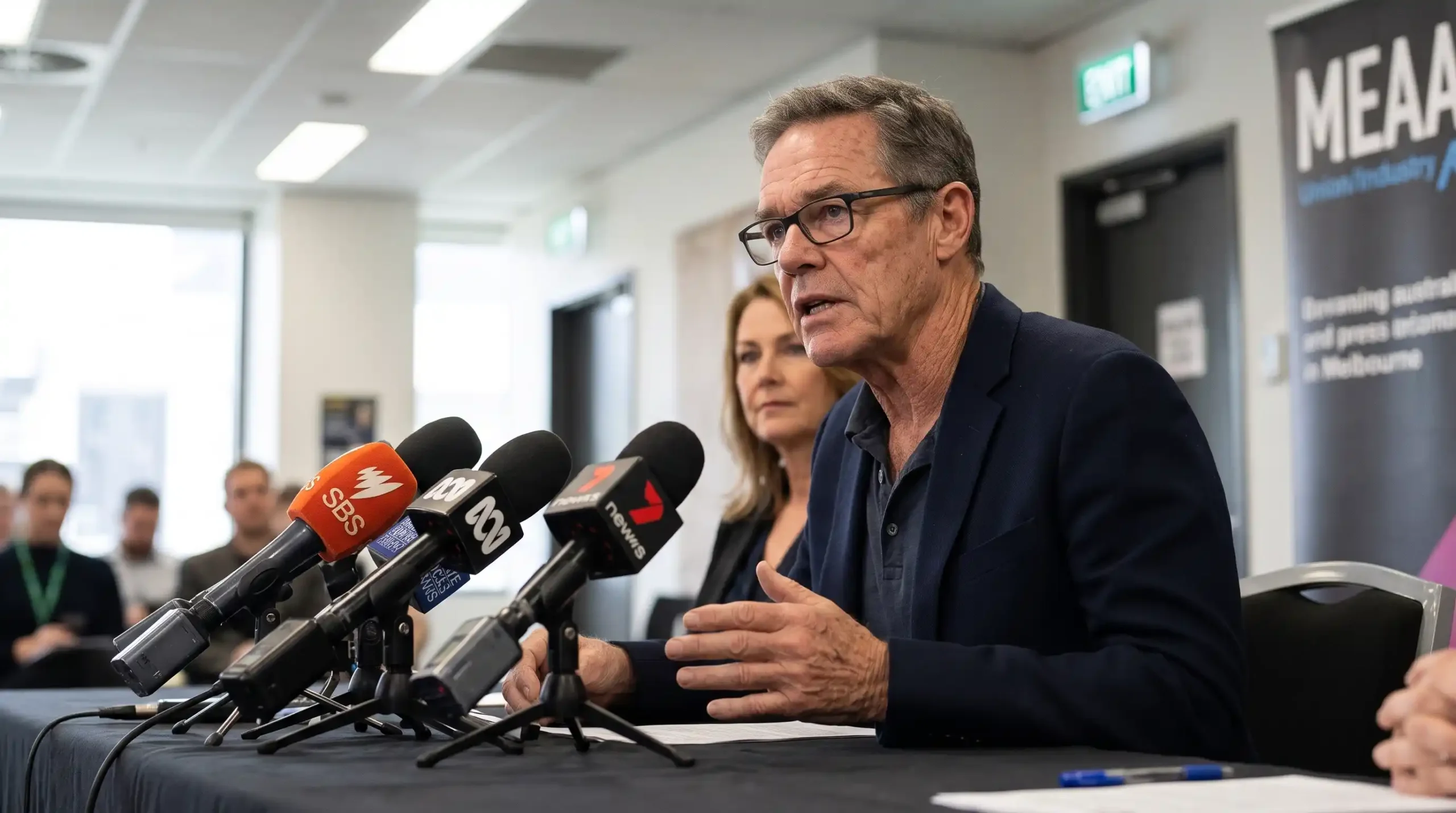
The MEAA confirmed it is actively advising affected Neighbours cast members. MEAA acting chief executive Adam Portelli stated that repurposing archival work through AI tools without prior consultation or fair compensation establishes a dangerous industry baseline, calling for stronger statutory AI guardrails and explicit performer consent mechanisms.
The Contractual Fault Line: Legacy Buyouts vs. Coin-Gated Apps
The dispute exposes a structural vulnerability in entertainment law that extends far beyond Australian television. When actors signed standard television contracts between 2005 and 2011, digital distribution clauses were drafted to cover DVD box sets, early catch-up portals, and standard SVOD/AVOD rebroadcasts of intact episodes.
As analyzed in TV Central’s examination of performer control over archival TV and AI Rights Brief Daily, three contractual gray zones emerge when legacy libraries undergo AI-assisted vertical conversion:
-
Derivative Work vs. Format Shifting: Rights holders typically argue that cropping 16:9 footage to 9:16 and editing episodes down for time is mere format-shifting, analogous to pan-and-scan television edits of widescreen films or syndication cuts. Performers, writers, and unions counter that stripping out subplots, replacing the musical score, and slicing 22-minute episodes into 60-second cliffhangers creates a new derivative product that was never contemplated in the original grant of rights.
-
Microtransaction Revenue Accounting: Unlike traditional broadcast syndication or flat-fee streaming licenses, vertical platforms like Epis monetize viewers via a hybrid model of virtual coins, tiered subscriptions, and in-feed advertising. Legacy residual formulas rarely specify how, or if, performers and screenwriters participate in per-episode virtual coin unlocks.
-
Reputational and Moral Rights Context: When an algorithm and third-party editorial team isolate one famous alumna’s scenes from a multi-plot ensemble drama, co-stars have their performances reduced to decontextualized supporting clips on a mobile app they never agreed to endorse.
Strategic Takeaway for Rights Holders and Production Studios
For media executives and catalog owners evaluating vertical AI conversion tools like RedSnapper, the Neighbours controversy demonstrates that technical compliance (“no generative deepfakes were used”) does not insulate a studio from labor and publicity fallout.
-
When Archival AI Reframing Works: Repurposing unscripted formats, documentary libraries, or sports archives where talent clearances are fully bought out and narrative context isn’t altered by 60-second cuts carries minimal friction.
-
When Archival AI Reframing Backfires: Mining scripted union drama libraries from the pre-streaming era, especially when leveraging the breakout fame of an A-list actor like Margot Robbie without notifying or compensating the co-stars who appear in every reverse shot, invites immediate union intervention and reputational damage.
Before greenlighting AI-assisted vertical recuts of legacy scripted IP, legal and production teams must audit underlying performer, writer, director, and music agreements for derivative-editing restrictions, establish transparent residual accounting for coin-based monetization, and issue advance talent notifications rather than letting actors discover their digital repackaging in the trade press.
What do you feel about this post?

Like

Love

Happy

Haha

Sad

Angry

I am an independent writer and digital researcher tracking everyday trends, tech shifts, and modern culture across the US. I focus on cutting through internet noise to bring you crisp, honest stories and practical takeaways you can actually use.