Zach Bryan Tour Guide: Stadium Schedules, Ticketing Mechanics, and Real Cost Benchmarks
Zach Bryan ended traditional year-long arena routing after completing The Quittin Time Tour, shifting his live schedule to standalone stadium residencies, collegiate football venue takeovers, and last-minute AXS lottery drops. Fans must now target isolated destination weekends rather than regional arena stops.
The 60-city arena grind is dead for the Oklahoma songwriter. After wrapping his mammoth 2024 run in Tulsa and Brooklyn, Bryan publicly committed to stepping back from relentless highway routing to pursue graduate studies in Paris and preserve his voice. That structural pivot fundamentally changed how fans buy tickets, travel to shows, and budget for admission.
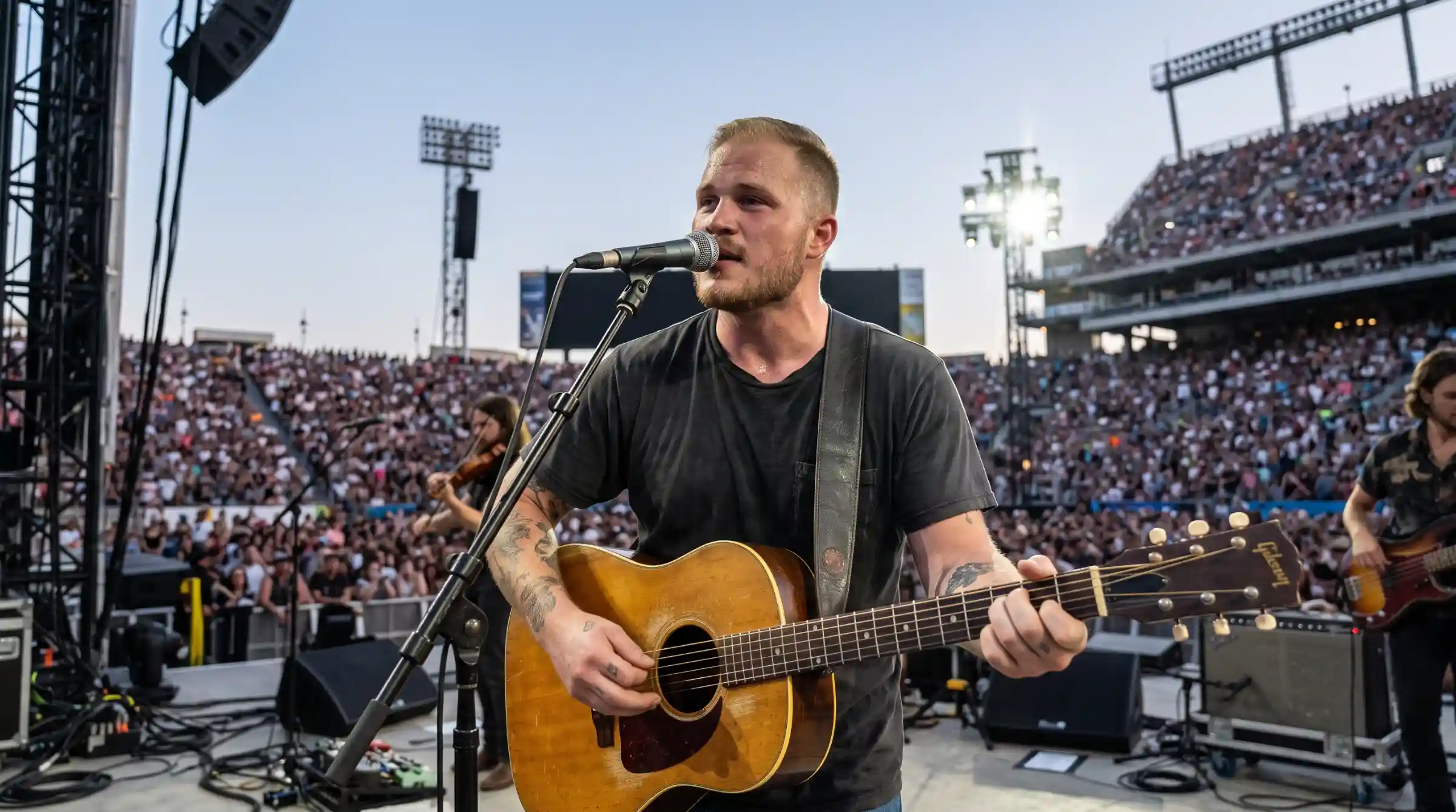
Instead of playing mid-sized regional hockey arenas on Tuesday nights, his booking strategy centers on massive single-weekend spectacles. Historic landmarks like Michigan Stadium in Ann Arbor (hosting over 112,000 attendees in a single night), three-night stands at New Jersey’s MetLife Stadium, San Francisco’s Golden Gate Park, and London’s Hyde Park represent the blueprint. When he wants an intimate room, he bypasses standard promoter announcements entirely, dropping surprise registration links for venues like Red Rocks Amphitheatre just weeks before showtime.
Why Traditional Tour Routing Gave Way to Stadium Residencies
Economics and logistics drove this shift. Moving a 10-piece band with horn and string sections across forty states requires dozens of semi-trucks and exhausting load-in schedules. Concentrating demand into three-night stadium residencies or 100,000-capacity college football venues allows the production team to build an massive in-the-round center stage once while serving the equivalent of five arena crowds.
For ticket buyers, regional convenience disappeared. Unless you live near a major coastal hub, a flagship college football town, or a major festival ground like Stagecoach, catching a live set requires booking flights and hotels. Hotel inventory within five miles of collegiate venues like Notre Dame Stadium or Marshall University’s Joan C. Edwards Stadium typically sells out within four hours of an initial tour announcement.
Experienced attendees lock in refundable lodging the moment a teaser clip drops on Bryan’s Instagram or X feed, days before presale codes distribute. Waiting until you secure tickets in the queue means paying triple the nightly rate or commuting fifty miles after midnight.
How Zach Bryan’s Two-Tier Ticketing Architecture Works
Buying admission requires understanding which ticketing ecosystem controls the specific venue. Years after releasing the live album All My Homies Hate Ticketmaster, Bryan operates within a split reality dictated by exclusive venue contracts. Stadiums and major amphitheaters almost universally mandate Ticketmaster or SeatGeek, while select independent venues and low-cost fan drops run through AXS.
| Acquisition Channel | Transferability Rules | Typical Fee Load | Barcode Delivery Window | Primary Risk Factor |
| Artist Presale (Ticketmaster / SeatGeek) | Standard transfer enabled 72 hours prior to doors (varies by state law) | 22% to 28% above base face value | 24 to 72 hours before showtime via rotating SafeTix | Dynamic “Official Platinum” price surges mixed into standard inventory |
| Face Value Exchange (Official Resale) | Locked to original purchase price plus taxes; instant account reassignment | 10% to 15% buyer service fee on re-listed inventory | Immediate reissue into buyer’s native ticketing app | Zero price negotiation; requires constant browser refreshing 48 hours pre-show |
| AXS Fair AXS Lottery | Strictly non-transferable; original credit card and matching government ID required | Flat $10 to $18 facility and processing charge | In-app QR code activates 2 hours before gate entry | Group must enter the venue together; primary buyer cannot gift or split tickets |
| Third-Party Brokers (StubHub / VividSeats) | Dependent on seller fulfilling mobile transfer or providing secure wallet links | 30% to 40% combined buyer and seller spread | Guaranteed only up to 4 hours before event start | Speculative listings sold before presales open; non-transferable state exclusions |
New York, Illinois, Colorado, Connecticut, Virginia, and Utah enforce statutory protections banning non-transferable ticket restrictions. If you attend a show at MetLife Stadium (New Jersey) versus a show in New York State, the transfer rules on your mobile wallet ticket will behave differently based on local legislation.
Out-the-Door Pricing Benchmarks and Hidden Fee Mechanics
Expect steep variance between base face value and final checkout totals. On The Quittin Time Tour and subsequent stadium dates, base prices expanded significantly compared to the $50 flat-rate ethos of his 2023 Burn, Burn, Burn run.
Standard stadium pricing breaks down across four distinct tiers:
- Upper Bowl / 300-Level Seating: $79.50 to $129.50 base price ($102 to $165 after service charges and facility fees).
- Lower Bowl / 100-Level & Club Sidelines: $179.50 to $299.50 base price ($225 to $375 out-the-door).
- General Admission Floor / Pit: $249.50 to $399.50 base price ($310 to $490 total checkout cost).
- VIP Early-Entry Lounge Packages: $495.00 to $750.00 depending on merchandise bundles and dedicated bar access.
Watch the filter toggles during the initial onsale. Ticketmaster defaults to checking both “Standard Admission” and “Official Platinum” boxes simultaneously. Official Platinum tickets carry zero VIP perks, no early entry, and no merchandise; they are standard seats algorithmically repriced up to $850 or more based on real-time queue volume. Uncheck the Platinum filter immediately upon entering the interactive seat map to avoid overpaying by 300 percent during the first twenty minutes of a presale.
Securing Valid Entry and Avoiding Secondary Market Traps
Screenshots will fail. Modern stadium gates rely on NFC tap-to-enter tokens and rotating encrypted barcodes that refresh every fifteen seconds.
Follow this exact sequence when purchasing or transferring tickets outside the primary presale window:
- Verify the venue’s primary ticketing partner directly through the stadium’s official box office calendar before touching any secondary marketplace.
- Check whether the specific event enforces an AXS Fair AXS identity lock, which immediately invalidates any listing posted on StubHub, SeatGeek, or Viagogo unless the seller walks you through the turnstile in person.
- Wait until 72 hours before showtime to buy secondary stadium tickets; seasonal price tracking consistently shows broker panic-selling peaks between 48 and 12 hours prior to doors as unsold inventory approaches zero value.
- Accept mobile transfers exclusively inside the native venue app (Ticketmaster, AXS, or college athletic department Paciolan accounts) and immediately add the pass to Apple Wallet or Google Wallet over a stable Wi-Fi connection.
- Download your digital parking pass into your phone’s native wallet before leaving your hotel, as cellular towers surrounding 80,000-seat stadiums routinely drop data packets two hours before showtime.
Never purchase speculative “presale guarantee” listings that appear on secondary platforms before the official artist presale has even occurred. Those sellers do not possess seat locations and are gambling that they can fulfill your order at a lower cost later.
General Admission Floor Strategy and the “Revival” Encore Structure
Stage configuration dictates where you should stand. In arenas and select stadiums where Bryan uses a 360-degree center-stage layout, he rotates between four microphones positioned at each compass point, giving the entire floor rail equal visibility. At festival stages and end-stage football configurations (such as Hyde Park or Golden Gate Park), the setup reverts to a traditional proscenium front-facing rig where center-rail positioning matters.
If you hold General Admission Pit tickets and want front-rail placement without paying for a VIP package, check the venue’s morning numbered-wristband policy. Many stadiums distribute sequentially numbered wristbands at 9:00 AM at a designated box office window, allowing fans to leave the property, hydrate, and return to line up in numerical order ninety minutes before doors open. Camping overnight on stadium concrete without verifying this policy often results in security dispersing the unofficial line at dawn.
Pace your departure around the setlist structure. Bryan typically performs 22 to 26 songs over two hours and fifteen minutes, opening with high-tempo staples like Overtime or Open the Gate before stripping the stage down for solo acoustic cuts like Pink Skies and Something in the Orange.
Do not leave when the house lights dip after the main set. The encore consists of a single song: Revival. Rather than a standard three-minute radio play, the band stretches Revival into a 12-to-18-minute communal barn-burner, introducing every touring musician for an extended instrumental solo while bringing out opening acts to sing the refrain “Baptize me in a bottle of Beam.” Simultaneously, massive traffic bottlenecks form in stadium parking lots the second the final snare hits. Leaving during the first verse of Revival saves forty-five minutes in parking garage gridlock; staying until the final bow guarantees you witness the centerpiece of the entire live production.
Frequently Asked Questions
Is Zach Bryan still touring after The Quittin Time Tour?
Yes, but he no longer books traditional 50-city arena tours. His live schedule consists of select high-capacity stadium weekends, major festival headlining slots, collegiate stadium events, and occasional low-capacity lottery shows announced on short notice.
How does the Zach Bryan live recording ticket QR code work?
At select shows, physical tickets or venue video boards display a QR code linking to an official archive registration page. Attendees who register receive digital download or streaming access to the live soundboard audio recorded at their specific concert date, a model popularized during his 2024 tour.
Can you buy Zach Bryan tickets on StubHub or SeatGeek?
For large stadium dates where Ticketmaster enables standard mobile transfer 72 hours before the event, third-party resale tickets work normally once transferred to your account. For intimate AXS Fair AXS lottery shows (such as Red Rocks), tickets are strictly non-transferable unless the venue is located in a state that legally prohibits transfer bans.
How long is a Zach Bryan concert from doors to curfew?
Doors typically open at 5:00 PM or 5:30 PM for stadium dates, with two opening acts performing between 6:30 PM and 8:30 PM. Zach Bryan normally takes the stage between 9:00 PM and 9:15 PM and plays until the local municipal noise curfew at 11:00 PM or 11:15 PM.
Sources & References
- Zach Bryan Official Portal: Zach Bryan Tour Dates & Announcements, Official presale registration links, standalone stadium announcements, and merchandise dispatches.
- Ticketmaster Official Artist Page: Zach Bryan Tickets & Face Value Exchange Terms, Primary stadium inventory, SafeTix rotating barcode protocols, and Face Value Exchange eligibility rules.
- AXS Official Ticketing: Zach Bryan Fair AXS Registration & Venue Policies, Non-transferable lottery mechanics, ID verification requirements, and Red Rocks ticketing rules.
- University of Michigan Athletics: Michigan Stadium Concert Configuration & Attendance Records, Verified single-concert attendance benchmarks exceeding 112,000 fans and collegiate stadium entry protocols.
What do you feel about this post?

Like

Love

Happy

Haha

Sad

Angry

I am an independent writer and digital researcher tracking everyday trends, tech shifts, and modern culture across the US. I focus on cutting through internet noise to bring you crisp, honest stories and practical takeaways you can actually use.